


%20(2).avif)
San Antonio White-Collar Crimes Attorney
White-Collar Crimes We Defend
Financial crime charges can threaten your freedom, career, and the reputation you’ve worked so hard to create. Because of this, financial crime charges require an exhaustive investigation and a strategic defense.

Fraud (Wire, Mail, & Insurance)
Federal prosecutors use emails and financial records to allege intentional deception. We challenge the government’s interpretation of these records and demonstrate the legitimate business purpose behind your actions.

Embezzlement
Usually arising from accounting disputes or compensation disagreements, these charges involve the misappropriation of entrusted funds. We examine financial ledgers to verify authorization or to demonstrate that alleged losses are legitimate expenses.

Money Laundering
The state must prove you knew funds were illegal and intentionally hid their source. We contest the government’s financial analysis and demonstrate the lawful nature of your transactions.

Tax Crimes
Charges of evasion or fraud often stem from good-faith errors. We challenge claims of "willfulness" and work to resolve disputes with tax authorities before they become criminal cases.

Securities & Investment Fraud
Cases involving the SEC often hinge on complex financial judgments. We defend against allegations of insider trading or Ponzi schemes by proving legitimate business decisions and a lack of fraudulent intent.

Healthcare Fraud
Medical professionals face career-ending allegations of false billing or upcoding. We analyze billing records to show that coding errors occurred, not intentional deception.

Computer Crimes & Hacking
Many "unauthorized access" charges are actually employment disputes or misunderstandings about permission. We present evidence of authorized use or legitimate research purposes.

Bribery & Public Corruption
These high-stakes cases often rely on undercover operations and recorded talk. We challenge the existence of any "quid pro quo" agreement and defend the legitimacy of your business dealings.
.avif)
.avif)
Protect Your
Career and Freedom
White-collar crime charges threaten everything you've built. Get immediate protection from a San Antonio defense attorney who handles complex financial cases and fights to protect your professional reputation and freedom.

Federal vs. State White-Collar Charges
White-collar crimes can be prosecuted in either state or federal court, with significant differences in procedures and penalties.
- Federal prosecution: Federal agencies like the FBI, IRS, Secret Service, and SEC investigate white-collar crimes involving interstate commerce, federal programs, or amounts exceeding federal thresholds. Federal cases involve mandatory sentencing guidelines, longer investigation periods, grand jury proceedings, and potentially harsher penalties, including mandatory minimums.
- State prosecution: Texas prosecutors handle fraud, theft, and forgery cases that don't meet federal criteria. State cases typically involve faster timelines, more negotiation flexibility, and different sentencing options, including probation and deferred adjudication. These are often not available in federal court.
- Parallel proceedings: Many white-collar crime investigations involve simultaneous criminal and civil proceedings, regulatory investigations, and professional licensing reviews. You may face prosecution in both state and federal court for related conduct.
Texas Penalties for White-Collar Crimes
White-collar crime penalties depend on the amount involved, the number of victims, and whether charges are state or federal.
- Class C misdemeanor: Theft or fraud under $100 results in fines up to $500 with no jail time.
- Class B misdemeanor: Theft or fraud of $100 to $750 carries up to 180 days in jail and fines up to $2,000.
- Class A misdemeanor: Theft or fraud of $750 to $2,500 carries up to one year in jail and fines of $4,000 to $8,000.
- State jail felony: Theft or fraud of $2,500 to $30,000 carries a sentence of 180 days to 2 years in state jail and fines up to $10,000.
- Third-degree felony: Theft or fraud of $30,000 to $150,000 carries a 2 to 10-year prison sentence and fines up to $10,000.
- Second-degree felony: Theft or fraud of $150,000 to $300,000 carries a 2 to 20-year prison sentence and fines up to $10,000.
- First-degree felony: Theft or fraud exceeding $300,000 carries a sentence of 5 to 99 years or life in prison and fines up to $10,000.
- Federal penalties: Federal white-collar crimes carry different penalties, often with mandatory minimums. Wire fraud carries up to 20 years per count, money laundering up to 20 years per count, tax evasion up to 5 years per count, and securities fraud up to 25 years per count. Federal judges consider sentencing guidelines based on loss amounts and other factors.
- Enhanced penalties: Public servants, elderly victims, and nonprofit organizations are subject to enhanced penalties. Multiple victims or sophisticated schemes can substantially increase sentences.
Collateral Consequences
Beyond prison time, white-collar convictions carry lasting consequences, including restitution orders that can exceed millions of dollars, as well as the forfeiture of assets and property. Further, certain careers can be significantly affected, such as professional license revocation for lawyers, doctors, accountants, and other licensed professionals, and the loss of security clearance. The SEC has the authority to bar those convicted of white-collar crimes from serving as corporate officers. Non-citizens can face immigration consequences, including deportation, and permanent damage to their professional reputation.
Defense Strategies for White-Collar Cases

These cases involve complex financial evidence and require strategic defense from day one.
- Lack of criminal intent: White-collar crimes require proof of specific intent to defraud or deceive. We demonstrate that transactions were legitimate business dealings, that mistakes were honest errors rather than fraud, that you relied on professional advice from accountants or attorneys, and that no intent to defraud existed.
- Insufficient evidence: Prosecutors must prove guilt beyond a reasonable doubt through financial records, witness testimony, and documentary evidence. We challenge the sufficiency of the evidence, identify gaps in the government's case, and present alternative explanations for the transactions.
- Good faith reliance: When you relied on advice from accountants, attorneys, or other professionals, criminal intent may be absent even if the conduct violated regulations. We present evidence of professional consultations, demonstrate reasonable reliance, and show that you believed conduct was lawful.
- Authorization and consent: Many white-collar cases involve disputes over whether you had the authority to access funds, make transactions, or use information. We present evidence of authorization, demonstrate the scope of authority, and challenge claims that the conduct was unauthorized.
- Accounting errors: Complex financial transactions sometimes result in honest mistakes, miscalculations, or bookkeeping errors that don't constitute fraud. We consult with forensic accountants, identify mathematical errors in the government's calculations, and demonstrate that the discrepancies resulted from legitimate confusion rather than criminal conduct.
- Fourth amendment violations: Search warrants for financial records, computers, and business premises must comply with constitutional requirements. We challenge overly broad warrants, examine whether probable cause existed, and fight to suppress evidence obtained illegally.
- Fifth amendment violations: Statements obtained without proper Miranda warnings or through coercive tactics cannot be used against you. We scrutinize interrogations, challenge any voluntary consent to interviews, and exclude unconstitutionally obtained statements.
- Statute of limitations: Federal fraud charges must generally be filed within five years of the offense, though some exceptions apply. Tax crimes have six-year limitations periods. We examine whether charges were filed in time and move to dismiss the time-barred counts.
- Civil remedy more appropriate: Many cases criminalize conduct that should be resolved through civil litigation. Business disputes, contract disagreements, and accounting disputes often don't involve criminal intent. We demonstrate that civil remedies are appropriate and that criminal prosecution is unwarranted.
- Entrapment: In cases involving government informants or undercover operations, we examine whether agents induced criminal conduct you wouldn't have otherwise committed. Entrapment defenses apply when government tactics cross constitutional boundaries.
The Investigation Phase
White-collar crime investigations often last months or years before charges are filed, and early intervention can prevent prosecution.
- Grand jury subpoenas: Receiving a grand jury subpoena means you're under investigation. Never respond without consulting an attorney. Subpoenas require the production of documents and sometimes testimony. We review subpoenas, assert privileges where appropriate, and determine appropriate responses.
- Search warrants: FBI or IRS agents executing search warrants at your home or business mark serious escalations. Cooperate with the search but assert your right to remain silent. Document what agents take and contact an attorney immediately.
- Target letters: Federal prosecutors sometimes send target letters informing you that you're under investigation and may be indicted. These letters often offer opportunities to present evidence to prosecutors before charges are filed. We prepare proffer letters and, when possible, defend against a potential indictment.
- Proffer sessions: Prosecutors may offer opportunities to meet and provide information. These meetings carry serious risks, as statements made can be used against you. We carefully evaluate whether proffer sessions serve your interests and, when appropriate, prepare thoroughly.
- Cooperation agreements: In some cases, cooperating with investigators and providing testimony against others reduces your exposure. Cooperation carries risks and requires careful negotiation of immunity agreements or cooperation plea agreements. We evaluate whether cooperation serves your interests.
- Pre-indictment intervention: Early attorney involvement sometimes prevents charges through persuading prosecutors that evidence is insufficient, demonstrating a lack of criminal intent, arranging restitution, or presenting exculpatory evidence they haven't considered.
Why You Need an Attorney Immediately

White-collar investigations involve tactics designed to elicit incriminating statements and gather evidence before you know you're a target.
- Everything you say will be used against you: Federal agents are highly trained interrogators who create rapport before asking incriminating questions. Seemingly innocent explanations become evidence of cover-ups or consciousness of guilt. Invoking your right to remain silent cannot be used against you.
- Document preservation: Once you know you're under investigation, you have obligations to preserve documents and electronic records. Destroying evidence, even inadvertently, can result in additional obstruction charges. We advise on proper document preservation and response to preservation demands.
- Voluntary production vs. subpoenas: Investigators often request documents "voluntarily" rather than through subpoenas. Voluntary production waives privileges and provides evidence without procedural protections. We evaluate what must be produced and assert privileges appropriately.
- Media and reputation: High-profile white-collar cases attract media attention that damages professional reputations before trials even begin. Early intervention allows us to manage media inquiries and protect your public image.
- Asset freezing and forfeiture: Prosecutors can freeze bank accounts and seize assets even before charging you. Early intervention helps protect assets and negotiate the release of frozen funds needed for living expenses and legal fees.
The Legal Process for White-Collar Cases
- Investigation: Agents may review your finances for years without your knowledge. If contacted, do not speak to them; call an attorney.
- Arrest or summons: Whether you are arrested or summoned to court, remain silent. Secure legal representation before any interaction.
- Bond hearing: A judge sets release conditions, including travel restrictions. We work to ensure you remain free during the legal process.
- Indictment: A grand jury reviews the state's case in secret. We may provide prosecutors with facts early to try to prevent formal charges.
- Arraignment & discovery: After pleading not guilty, we receive the government’s files. We analyze every financial record to find evidence for your defense.
- Legal motions: We ask the court to throw out illegal evidence or dismiss weak counts. This can end the case or reduce your risk.
- Negotiations: We discuss settlements to lower potential penalties, weighing these options against the strength of the government's evidence.
- Trial prep: We use forensic accountants to simplify financial data and prepare to challenge the state's witnesses.
- Trial: We contest the prosecution’s data and present our own experts to create a reasonable doubt before a jury.
- Sentencing & appeal: If necessary, we fight for the lowest possible penalties and review the record for errors to challenge the verdict.

.avif)
From simple possession to serious trafficking allegations, drug charges can derail your life and career.
.svg)
Meet Justin M. Fowlks
Justin M. Fowlks provides strategic defense for clients facing white-collar crime charges in both state and federal court. His experience handling complex financial cases gives clients confidence when their careers and freedom are threatened by fraud, embezzlement, or other financial crime allegations.
These cases require an attorney who understands financial evidence, forensic accounting, and federal court procedures. Justin provides personal attention to every client, explaining complex charges clearly, evaluating all defense options, and fighting to protect their professional reputations and freedom.
Justin can:
- Be There 24/7
- Give Free Initial Consultation
- Provide Service in Spanish
- Provide Full Personal Attention
- WIN YOUR CASE

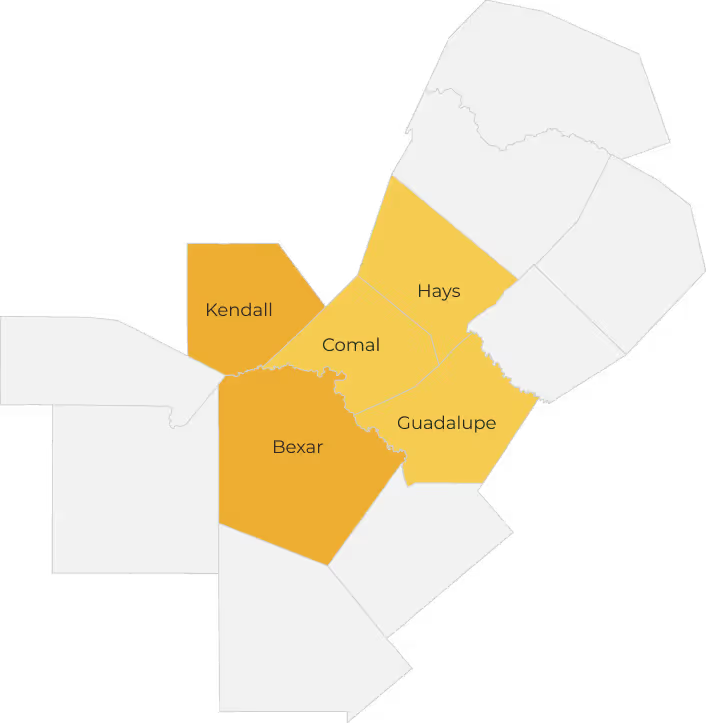
Areas We Serve
Primary counties:
- Bexar County
- Kendall County
Additional areas:
- Guadalupe County
- Comal County
- Hays County
and surrounding communities.
Frequently Asked Questions About White-Collar Crimes
Politely decline the interview and request an attorney immediately. Federal agents are skilled interrogators trained to elicit incriminating statements. Even innocent explanations can be twisted into evidence of guilt. You have an absolute right to remain silent and to have an attorney present during any questioning. Invoking this right cannot be used against you.
Yes, charges can be dismissed for insufficient evidence, expiration of the statute of limitations, lack of criminal intent, constitutional violations, or successful pre-indictment negotiations with prosecutors. Each case presents different opportunities depending on the evidence and circumstances involved.
Civil cases seek monetary damages and are resolved through lawsuits with lower burdens of proof. Criminal cases seek punishment, including imprisonment, and require proof beyond a reasonable doubt. The same conduct can trigger both civil and criminal liability. Defending criminal charges takes priority because convictions carry prison sentences.
Yes, federal and state forfeiture laws allow seizure of assets derived from criminal activity or used to facilitate crimes. This includes bank accounts, real estate, vehicles, and business interests. Forfeiture proceedings are civil actions separate from criminal cases. We fight asset seizures and work to recover frozen assets needed for living expenses and legal defense.
Federal white-collar investigations typically last 12 to 36 months before charges are filed, though some continue for years. Grand jury investigations involve extensive document review, witness interviews, and forensic accounting analysis. The lengthy timeline provides opportunities for pre-indictment intervention but also creates prolonged uncertainty.
Plea decisions require careful analysis of trial risks, potential sentences, the strength of evidence, and collateral consequences. Federal plea agreements often require cooperation, guilty pleas to multiple counts, and acceptance of sentencing guideline calculations. Never accept a plea without fully understanding all implications and exploring trial options.

Your Reputation Is at Stake
White-collar charges destroy professional reputations and careers even before conviction. You need an attorney who acts quickly to protect your interests during the investigation, challenges the government's evidence, and fights for your freedom and future. Ignoring the problem won’t make it go away. Call us now for help.
We will contact you shortly.