



San Antonio Drug Manufacturing Attorney
Drug Manufacturing Charges We Defend in San Antonio and the Surrounding Counties
Texas Drug Manufacturing Laws
Texas law defines manufacturing narrowly, and that definition decides whether you're facing a manufacturing charge, a possession charge, or something else entirely.
Under Texas Health and Safety Code Section 481.002, manufacturing means the production, preparation, propagation, compounding, conversion, or processing of a controlled substance, whether by extraction from a natural source or by chemical synthesis, including packaging or relabeling it.
The definition does not apply to marijuana, and it excludes a licensed practitioner preparing or packaging a substance as an incident to administering or dispensing it in the course of practice, or for research or analysis, and not for sale.

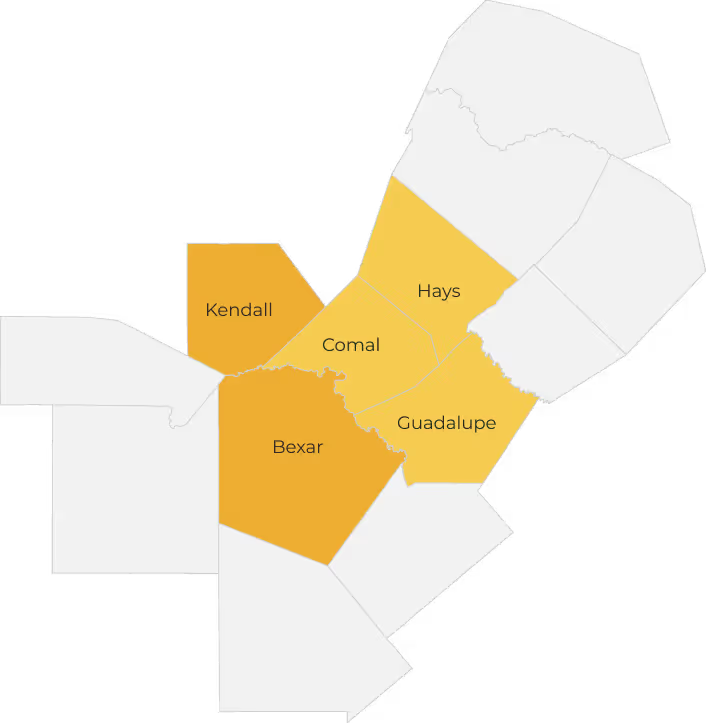
Why Cases in Bexar, Comal, Guadalupe, and Kendall Counties Play Out Differently
Several local factors shape how aggressively a manufacturing case gets pursued.
Joint task forces made up of SAPD, the Bexar County Sheriff's Office, county sheriffs' offices in the surrounding counties, the Texas Department of Public Safety, and DEA agents frequently run clandestine lab investigations together, which means a case that starts as a local complaint can shift into federal jurisdiction partway through.
I-35 runs through San Antonio, New Braunfels, and the edge of Guadalupe County, and I-10 runs through Boerne and Seguin. Federal agents already watch these routes for trafficking-scale activity, so manufacturing cases here draw federal attention more often than in many other parts of the state.
Rural stretches of Kendall, Comal, and Guadalupe counties, and the outer parts of Bexar County, don't always have hazmat-certified officers on scene at a lab discovery, which opens the door to real questions about how evidence was collected and preserved.
Any one of these factors can decide whether your case stays local or goes federal.
Where State Charges Get Filed
Almost every manufacturing charge is filed as a felony. Each county's criminal district attorney prosecutes these cases in the felony district courts in San Antonio, New Braunfels, Seguin, or Boerne, not the county courts at law that hear misdemeanors. The county where you're charged affects everything from your bond amount to how quickly a grand jury reviews your case.
#cta_start
Get the Serious Defense You Need After a Raid
Manufacturing investigations often run for weeks before an arrest ever happens, which means the state's case is already built by the time you're in handcuffs. Get an attorney working the other side of that investigation immediately.
#cta_end
Drug Manufacturing Penalties You May Be Facing
Texas grades a manufacturing charge by the type of substance, the penalty group it falls under, and the weight involved, including any adulterants or dilutants. The ranges set out in Sections 481.112, 481.113, and 481.114 of the Texas Health and Safety Code run from a state jail felony to life in prison.
- State jail felony: Less than one gram of a Penalty Group 1 or 2 substance, or less than 28 grams of a Penalty Group 3 or 4 substance. The range is 180 days to two years in state jail and a fine of up to $10,000.
- Second-degree felony: One to four grams of a Penalty Group 1 or 2 substance, or 28 to 200 grams of a Penalty Group 3 or 4 substance. The range is 2 to 20 years in prison and a fine of up to $10,000.
- First-degree felony: Four to 200 grams of a Penalty Group 1 substance, four to 400 grams of a Penalty Group 2 substance, or 200 to 400 grams of a Penalty Group 3 or 4 substance. The range is 5 to 99 years or life in prison and a fine of up to $10,000.
- Enhanced first-degree felony: 200 to 400 grams of a Penalty Group 1 substance, or 400 grams or more of a Penalty Group 2, 3, or 4 substance. The range is 10 to 99 years or life in prison and a fine of up to $100,000.
- First-degree felony with a 15-year minimum: 400 grams or more of a Penalty Group 1 substance, such as methamphetamine, cocaine, or fentanyl. The range is 15 to 99 years or life in prison and a fine of up to $250,000.
- Drug-free zone enhancement: Under Texas Health and Safety Code Section 481.134, manufacturing within 1,000 feet of a school, playground, or youth center raises a state jail, third-, or second-degree charge by one degree. For first-degree offenses, it raises the minimum sentence by five years and doubles the maximum fine. The sentence cannot run concurrently with a sentence for another offense.
- Precursor and equipment charges: Under Texas Health and Safety Code Section 481.124, possessing or transporting chemicals or lab equipment with the intent to manufacture is its own felony, whether or not a working lab is ever recovered.
A manufacturing conviction reaches beyond the sentence itself. Property used in connection with a lab, including a home, land, or vehicle, can be targeted for civil forfeiture under Chapter 59 of the Texas Code of Criminal Procedure, and a residence contaminated by chemical production can carry separate cleanup liability.
Add to that a suspended professional license, a permanent felony record, and immigration consequences for non-citizens, and the cost of a manufacturing conviction extends well past the courtroom.
Federal vs. State Drug Manufacturing Charges
Whether your case stays in state court or moves to federal court changes the sentencing math entirely, and that decision is often made by investigators before you ever see a judge.
A case that begins with a local complaint can still end up in front of a federal judge once agents identify elements that draw federal interest. We track which direction a case is heading from the first phone call, not after an indictment lands.
Defense Strategies for Drug Manufacturing Charges
A manufacturing case rests on more moving parts than a simple possession charge, and each of those parts is a place we can attack the state's evidence.
- Evidence handling at the scene: Clandestine lab scenes require hazmat protocols for sampling and storage, and any gap in that chain can compromise the chemical testing prosecutors rely on.
- Weak connection to the equipment: When chemicals or equipment turn up in a shared apartment, a rental property, or a garage used by more than one person, the state still has to prove the items were yours to control.
- Disputed intent: Many precursor chemicals and pieces of lab equipment have ordinary, legal uses, from cold medicine to fertilizer to aquarium supplies, and Texas law requires proof of intent to manufacture, not just presence.
- Search warrant limits: Warrants built on an anonymous odor complaint or an informant's tip can be challenged for lacking probable cause or reliability. A warrantless thermal imaging scan of a home is itself a Fourth Amendment search.
- Informant and undercover buy problems: Cases built around a confidential informant or an undercover purchase open the door to entrapment arguments and corroboration requirements under Texas Code of Criminal Procedure Article 38.141, along with questions about the informant's own credibility and motives.
- Weight and lab testing disputes: Because penalty severity turns on aggregate weight, including adulterants, an error in how a substance was weighed or tested can move a case down an entire felony tier.
- Drug-free zone distance challenges: Measurement errors or a dispute over whether a location legally qualifies as a playground or youth center can defeat the enhancement outright.
We run down every one of these issues before deciding which combination gives you the strongest position in negotiations or at trial.
Why Choose Fowlks Law Firm?
-

On Call Around the Clock
Manufacturing investigations don't wait for business hours, and neither do we. The moment officers execute a search warrant, the clock starts on decisions that shape the entire case.
-

Fluent in English and Spanish
Every conversation with your attorney happens in the language you're most comfortable in, from the first jailhouse call through the closing argument.
-

Bond Posting in Bexar, Comal, and Guadalupe Counties
Fowlks Law Firm is approved to post bonds for its own clients in Bexar County, and approval in Comal and Guadalupe counties is underway. That can mean less time in jail and more time building your defense.
The Legal Process for Drug Manufacturing Cases
Manufacturing cases move through several distinct stages, and forensic testing on chemical evidence often stretches these timelines longer than a typical drug case.
- Search and arrest: Officers execute a warrant or make an arrest based on what they observe at the scene, and anything you say can be used against you later.
- Booking and magistrate hearing: After processing at the county jail, whether that's in San Antonio, New Braunfels, Seguin, or Boerne, a magistrate must see you within 48 hours of arrest and will set bond. Having an attorney involved early can mean the difference between a workable bond and one that keeps you locked up for months.
- Forensic testing: Chemical evidence has to be tested and weighed by a lab, and manufacturing cases often wait longer for these results than possession cases do.
- Grand jury review: A grand jury decides whether the evidence supports a felony indictment. When the prosecutor or grand jury allows it, your attorney may submit materials aimed at heading off an indictment.
- Discovery: Your attorney reviews the search warrant, lab reports, and officer reports under Texas Code of Criminal Procedure Article 39.14 for the gaps and inconsistencies that build a defense.
- Suppression motions: When the search, the informant, or the evidence handling raises constitutional problems, we file motions to keep that evidence out of trial entirely.
- Plea negotiations: Many manufacturing cases resolve through negotiated reductions once the weaknesses in the state's evidence come into focus.
- Trial: If the state won't offer a fair resolution, we take the case in front of a jury and hold prosecutors to their burden of proof.
Each stage gives your attorney a fresh chance to weaken the state's case.


From simple possession to serious trafficking allegations, drug charges can derail your life and career.

Our Drug Manufacturing Defense Team
The attorneys at Fowlks Law Firm defend drug charges of every size, from a single pipe found during a traffic stop to a multi-agency lab investigation. We know how manufacturing cases are built in Bexar, Comal, Guadalupe, and Kendall counties, and where they tend to fall apart. Our lawyers handle every case personally, in English or Spanish, whether you call at noon or at 3 a.m.
We can:
- Be There 24/7
- Give Free Initial Consultation
- Provide Service in Spanish
- Post Your Bond
- Provide Full Personal Attention
- WIN YOUR CASE

Areas We Serve
Bexar County:
- San Antonio
- Converse
- Helotes
- Live Oak
- Universal City
Comal County:
- New Braunfels
- Bulverde
- Canyon Lake
- Spring Branch
Guadalupe County:
- Seguin
- Schertz
- Cibolo
- Marion
Kendall County:
- Boerne
- Comfort
- Fair Oaks Ranch
We also serve Hays County and surrounding communities.
Frequently Asked Questions About Drug Manufacturing Charges in Texas
Yes. By the time you notice surveillance, a subpoena to your bank, or officers asking neighbors questions, an investigation has usually been open for weeks. Getting an attorney involved before an arrest gives us a chance to shape what happens next, including how you respond if agents show up at your door.
Chemical evidence takes longer to test than a simple possession case, so manufacturing charges often run 12 to 18 months from arrest to resolution, and federal cases can take longer still. Cases that go to trial, or that involve multiple co-defendants, tend to stretch past that window.
Presence alone is not proof of manufacturing. The state still has to show you took part in producing the substance or that you controlled the chemicals and equipment involved, and manufacturing arrests can sweep up people who happened to be in the wrong apartment or car at the wrong time.
Keep those conversations short. Anything you say to someone who isn't your attorney, including a roommate or a friend, can end up in front of a jury if that person is ever questioned or subpoenaed. Even the spousal privilege has limits. Save the details for a conversation that's actually protected.
Often, yes. Prosecutors frequently stack a manufacturing charge alongside possession, possession with intent to deliver, or a paraphernalia charge from the same arrest, and each one carries its own penalty range. A defense that only responds to one charge on the indictment leaves the others unanswered.
A manufacturing conviction is generally treated as a controlled-substance offense and often as an aggravated felony under federal immigration law, and it can affect a green card, visa, or reentry. If you're not a U.S. citizen, this needs to be reviewed alongside an immigration attorney, not just the criminal case. We flag immigration exposure early and coordinate with immigration counsel when a client needs it.
It depends on how the case ends. A dismissal or acquittal can often qualify for expunction, and some charges resolved through deferred adjudication may later qualify for an order of nondisclosure after a waiting period. A final felony conviction generally cannot be sealed under Texas law. What's available to you depends heavily on how the case is resolved now.

Your Freedom Starts with One Call
Manufacturing investigations often continue after an arrest, with detectives hoping you'll fill in the gaps yourself. Talk to Justin first. Call (210) 455-1000, day or night, to take charge of your defense in Bexar, Comal, Guadalupe, or Kendall County.
We will contact you shortly.